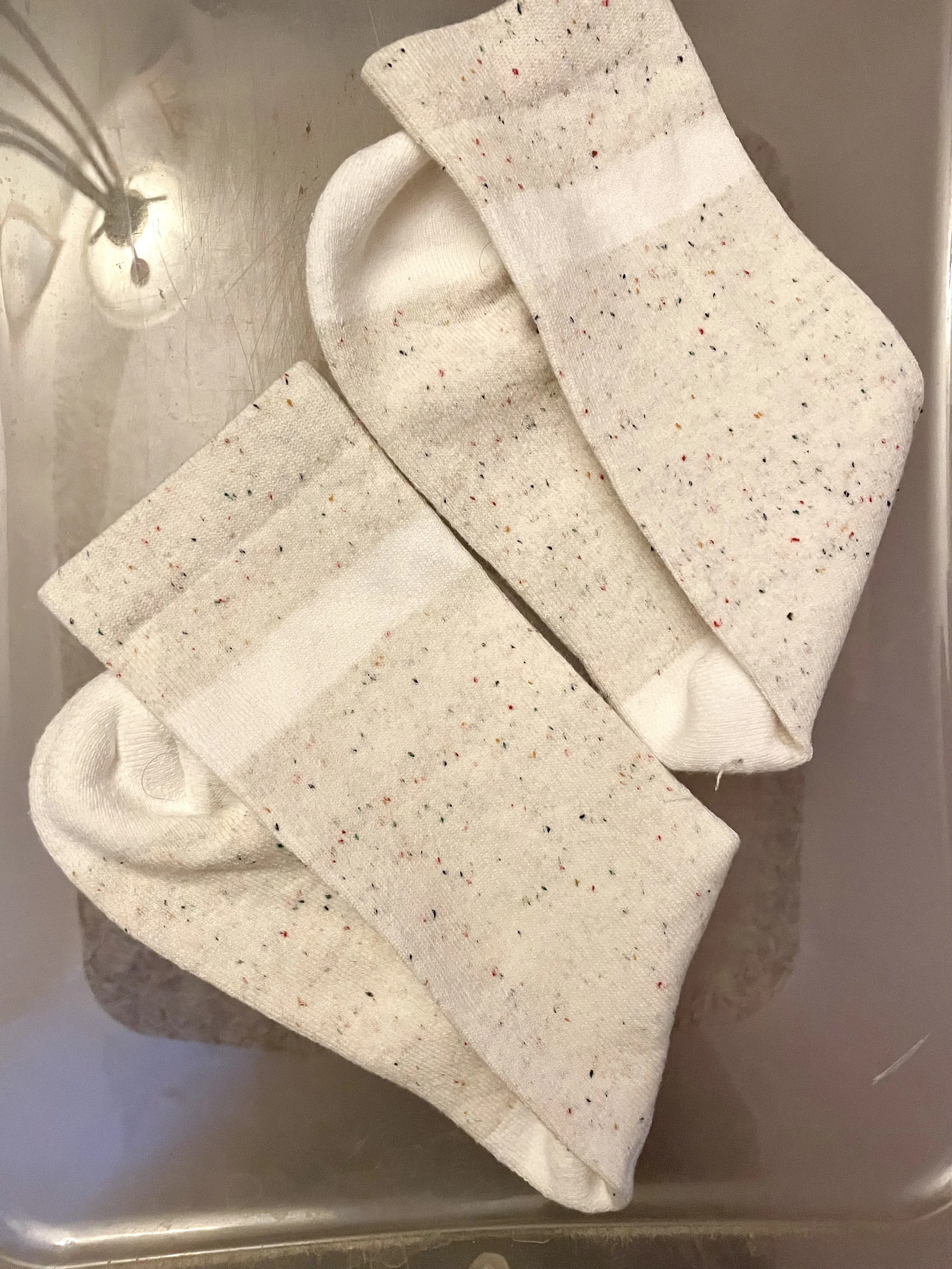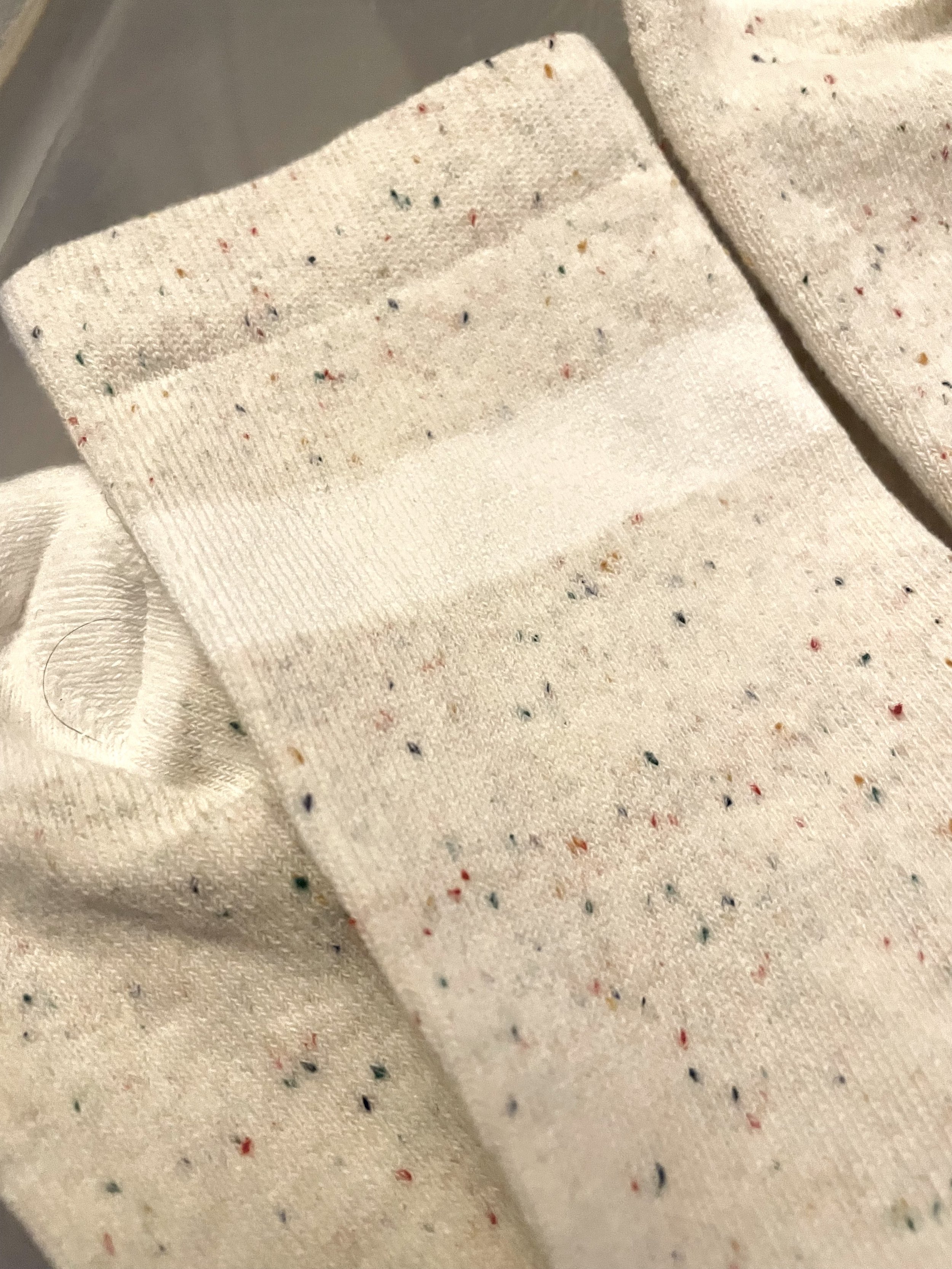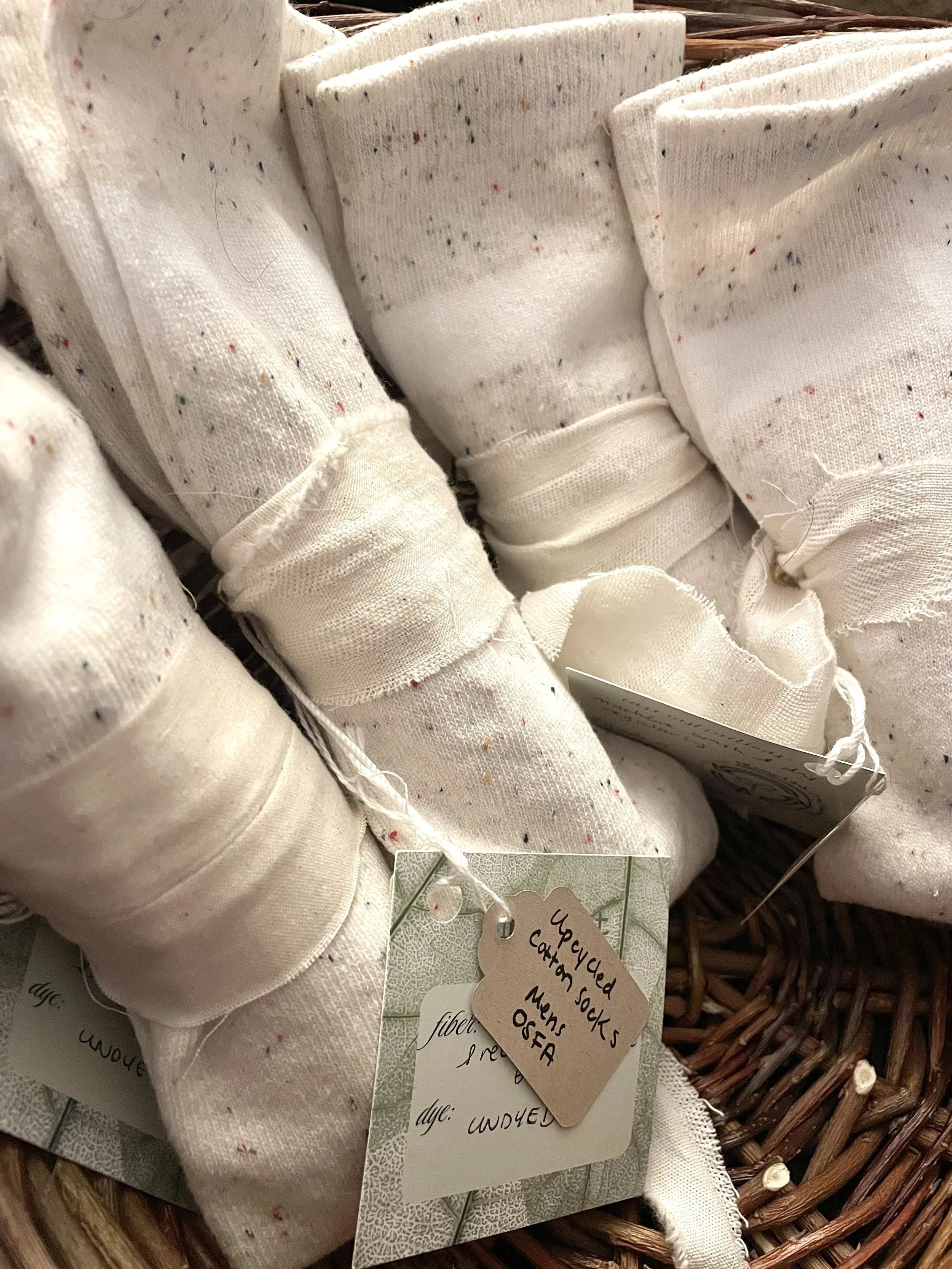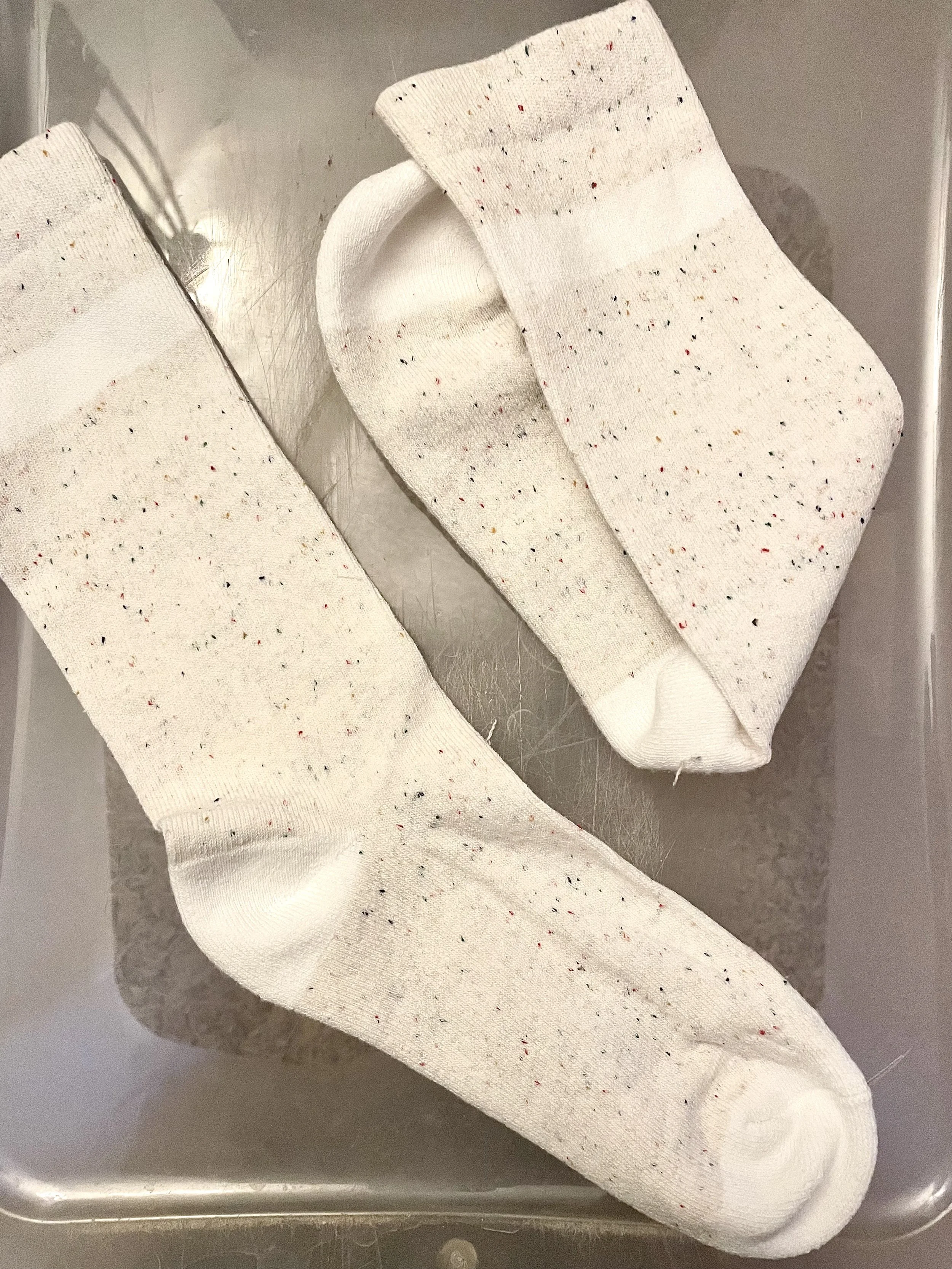
Upcycled Cotton Socks | Confetti | Undyed

$20.00

Super light weight, soft, and comfortable socks with a cushioned cotton terry sole & toe. 100% made in the USA, the yarn is created by spinning reclaimed cotton with polyester from recycled bottles.

The resulting socks maintain the softness and breathability of cotton, with the added durability of polyester. You can read more about the benefits of reclaimed textiles below ↴

There are no chemicals or dyes used in creating the confetti pattern, it comes directly from the selection of the colors in their reclaimed textiles.

Details:
👲 Material: Reclaimed Cotton & Recycled Plastic Bottles
👲 Dye: No Dye (Natural Colors Retained)
👲 Fit: One-Size-Fits-Most in “Womens” or “Mens”
👲 Care: Machine Wash as normal. Tumble dry on low.

These socks are offered in partnership with a US company that fully operates in the USA and are working to keep plastic & fabric scraps out of our landfills.

Size:

Super light weight, soft, and comfortable socks with a cushioned cotton terry sole & toe. 100% made in the USA, the yarn is created by spinning reclaimed cotton with polyester from recycled bottles.

The resulting socks maintain the softness and breathability of cotton, with the added durability of polyester. You can read more about the benefits of reclaimed textiles below ↴

There are no chemicals or dyes used in creating the confetti pattern, it comes directly from the selection of the colors in their reclaimed textiles.

Details:
👲 Material: Reclaimed Cotton & Recycled Plastic Bottles
👲 Dye: No Dye (Natural Colors Retained)
👲 Fit: One-Size-Fits-Most in “Womens” or “Mens”
👲 Care: Machine Wash as normal. Tumble dry on low.

These socks are offered in partnership with a US company that fully operates in the USA and are working to keep plastic & fabric scraps out of our landfills.

  • This product represents a new part of imprint-collective - focusing on up-cycled fashion as another important tier of sustainability. By making products from reclaimed fibers, we can save useful materials from ending up in the landfill.

    It’s also of note, that it’s common practice for rejected clothing to be shipped to developing countries as “charity”. But, this cheap, mass-produced clothing, which is often defective or damaged in transit, is packed full of harmful chemicals and plastic which then pollute their local environment and degrade the populations health. In these scenerios it’s left to these communities to deal with the problem and big businesses get to wipe their hands clean. It’s pure evil, really.

    It’s important for us to support businesses that do not benefit from the suffering of other human beings.